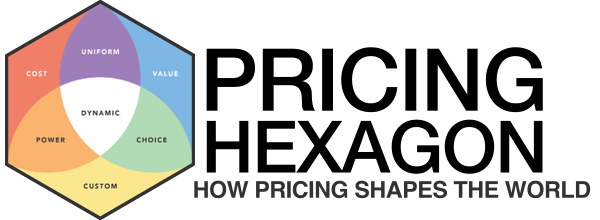

What is the Custom Game?
The Custom Game fits the pricing environment for negotiated B2B deals. Suppliers compete for individual customers in markets that lack broad customer segments, common price structures, and standard product configurations. The underlying products may appear similar, but price, volume, terms, service, logistics, risk, and supplemental offerings make each agreement distinct.
A strong Custom Game player establishes a defensible target price, manages the latitude that sales teams have for negotiations, and measures how each final agreement differs from that target. The company uses those differences to assess and understand customer behavior, competitive pressure, and sales performance.
The Custom Game requires discipline because pricing discretion is both necessary and dangerous. Salespeople need flexibility to respond to an account, but uncontrolled discounting can destroy revenue quality, result in inconsistent treatment of customers, and teach buyers that they should always push for a lower price. Pricing rules, incentives, data management, and organizational oversight must work together.
RECOMMENDED READING

How the Custom Game Works
The Custom Game – one of the seven pricing games in the Strategic Pricing Hexagon – is common in B2B industrial markets where products from competing suppliers are comparable, customers issue requests for proposals or negotiate directly, and the final agreement includes terms and conditions as well as unit or project price.
Volume often provides the starting point for a list price or reference price. Larger commitments can justify lower unit prices because they improve production planning, utilization, distribution efficiency, or selling costs. A target pricing formula should reflect the company’s actual economics and the way price typically changes as deal volume increases, but that relationship is not necessarily linear.
Market adjusters refine that target. Two customers purchasing a similar product may receive different agreements for legitimate economic reasons, depending on product mix, delivery complexity, customer location, payment terms, service requirements, contract duration, competitive intensity, capacity, and account risk. These factors should be defined clearly enough that similar deals receive similar treatment without eliminating the judgment needed for negotiations.
Competitors’ offerings and prices play an important role, because customers can compare suppliers and use competing bids as leverage. Custom Game players need a repeatable method for translating deal characteristics into target prices and deciding which concessions are justified. Simply matching the lowest competitive bid is not a strategy.
When Companies Should Play the Custom Game
The Custom Game is most relevant when several market characteristics occur together.
- Products are comparable across suppliers, but deal terms make the total offer distinct or unique.
- Customer needs are too varied for a small set of standard packages.
- Customers negotiate individual agreements or request competitive bids.
- The business sells primarily to organizations rather than individual consumers.
- Volume, mix, service, geography, timing, and risk can materially change deal economics.
- The sales force has discretion to adjust prices, discounts, and contract terms.
The presence of B2B negotiations alone does not determine which Game a company should play. The Custom Game fits markets with many negotiated transactions and enough recurring patterns to support consistent pricing rules. A market with only a few powerful buyers and sellers may belong in the Power Game, because each decision can alter the balance of the entire market. A business that can cluster customer needs into clear standardized packages for well-defined segments may be able to move toward the Choice Game.

How to Win the Custom Game

Establish a Target Pricing Formula
This process normally begins with the historic relationship between price and volume, which yields a product’s Natural Volume Slope (NVS). Using the NVS as a basis, the formula should convert volume and other observable deal characteristics into a target price or range to which the company applies market adjusters. A credible formula gives salespeople a grounded starting point and gives managers a consistent way to evaluate the tradeoffs required for any proposed concessions.

Track Price Discretion
Based on the discretion the sales team has used, the final net price can deviate from the target price. Repeated large deviations do not necessarily indicate poorly calibrated targets or weak negotiation skills. They can also expose the influence of a strong competitor or evolving customer expectations and thus provide the company with insights to recalibrate its strategy. The pattern matters more than any isolated concession.

Control Discounts and Givebacks
Direct discounts are only one form of value transfer to customers. Free freight, extended payment terms, rebates, added service, expedited delivery, warranties, and implementation support can undermine a deal whose stated price looks strong. Approval rules should consider the complete agreement.

Align Sales Incentives With Revenue Quality
A compensation plan focused only on volume can reward aggressive discounts, while a plan focused primarily on margin can discourage strategically valuable growth. To reward sellers for winning attractive business at defensible terms, Custom Game players should incorporate revenue and the appropriate use of price discretion into their incentive systems.

Make the Process Fair and Explainable
Two similar customers do not need identical prices, but they should receive consistent treatment. Internally, salespeople need confidence that the targets and approval rules reflect current market realities. Externally, the supplier should be able to explain how and why volume, service, risk, or other deal characteristics affect the offer.

Use Surcharges for Broad Cost Shocks
When fuel, materials, freight, tariffs, or another external cost affects the entire market, a visible and often transitory surcharge can help the Custom Game player respond without changing its core pricing logic. The surcharge separates a temporary or volatile cost from the underlying agreement and can be revised when conditions change. The surcharge should have a clear basis and should not become permanent price increase in disguise.
Custom Game Pricing Examples

Industrial Components
An industrial supplier may quote different net prices based on annual volume, product mix, production runs, delivery locations, and technical requirements. The product itself may be comparable to competing alternatives, but reliability, engineering support, lead times, and logistics can distinguish the complete deal.

Distribution and Wholesale
Distributors negotiate across a broad basket of products while accounting for order frequency, warehouse activity, freight, payment behavior, returns, and service. Pricing therefore needs to be managed at both the item and customer level. A discount on one line may appear harmless while weakening the profitability of the total account.

Business Services
Service providers can customize staffing, scope, response times, reporting, implementation, contract duration, and risk allocation. A clear target prevents the negotiation from becoming a simple hourly-rate comparison and helps the seller made reasonable tradeoffs instead of making outright concessions.

Equipment, machinery, and large durable goods
Viewed from a distance, these products may look similar and serve similar functions. But up close, they usually contain additional features as well as supporting terms and conditions that make them unique to the buyer. These differences can result in significant changes to the base price.
Benefits and Risks of the Custom Game
| Potential benefits | Common risks |
|---|---|
| Deals reflect each customer’s economics and requirements | Uncontrolled discounting creates price leakage and inconsistency |
| Sales teams can respond to competition and account context | Sellers make price concessions without receiving higher volumes or better terms |
| Target prices make negotiation more consistent | Poor targets cause good deals to look weak or bad deals to look acceptable |
| Deal data reveals market and sales-performance patterns | Complex rules slow decisions or encourage workarounds |
| Terms and services can differentiate similar products | Hidden givebacks weaken profitability despite an acceptable unit price |
Custom Game Compared With Other Pricing Games
The Custom Game can resemble other Games, because negotiated transactions often rely on value-based arguments and cost analyses and reflect dynamic market conditions. The market structure and decision process determine the dominant Game.
- Custom Game vs. Choice Game: Custom players negotiate individual deals, while Choice players standardize packages and let customers select among them. A Custom Game company may move toward Choice when it can translate recurring customer needs into a coherent lineup.
- Custom Game vs. Power Game: Custom markets contain many negotiated transactions and repeatable deal patterns. Power markets have concentrated buyers and sellers, which means that almost every account is a key account. One high-stakes decision can influence the next move across the entire market.
- Custom Game vs. Cost Game: Custom players use account and market characteristics to set negotiated prices. Cost players compete in commoditized markets where efficiency and cost-plus logic provide the main pricing degrees of freedom.
- Custom Game vs. Value Game: Custom players face strong competition and substantial buyer influence. Value players have differentiated offers and fragmented buyers, allowing price to align more directly with superior customer value in a “take it or leave it” manner.

FAQS
The Custom Game is a B2B pricing strategy for markets in which suppliers negotiate individual deals with many customers. A target price reflects expected volume and other deal characteristics, while controlled discretion allows salespeople to respond to competitive moves and customer requirements.
A target price is the expected net price for a deal after accounting for relevant characteristics such as volume, product mix, delivery, service, payment terms, competition, and risk. It provides a disciplined starting point for negotiation and a benchmark for evaluating the final agreement.
B2B agreements differ across customers, and salespeople often have discretion to close the deal. Without a target and approval framework supported by clear incentives, discounts can reflect personal habits and buyer pressure rather than real economic differences.
Price leakage is revenue that a company loses unnecessarily through discounts, rebates, credits, free services, freight, payment terms, or other concessions that are not fully recognized or justified. Leakage can occur even when the stated invoice price appears acceptable.
Sales teams should be evaluated on revenue quality as well as growth. Useful measures can include combinations of revenue, volume, the gap between target and final net price, and the value of non-price concessions. The measures should reflect the company’s economics, sales cycle, and overall objectives.
Such a move may make sense when customer needs repeat often enough to form clear segments and the company can replace many negotiated configurations with a small, fenced portfolio. The transition can simplify buying, reduce discount discretion, and create clearer trade-up paths.