

Pricing Strategy
The right pricing strategy can change the entire trajectory of a business, a market, or even society. That is why it’s important for business leaders – both executives and managers – to understand what makes a pricing strategy so powerful and how they can set their own strategy to tap that power.
Business leaders can get confused about pricing strategy, because the academic and business literature is vague about what constitutes one. That’s why many companies describe their pricing strategies in terms of pricing models, such discounts or subscriptions, or in terms of pricing methods, such as value-based pricing or cost-plus pricing.
That is a myopic view that assumes pricing is about finding numbers. A well-designed pricing strategy goes far beyond pure revenue and profit optimization.
RECOMMENDED READING


What Is Pricing Strategy
A pricing strategy is a business leader’s conscious decisions on how to shape their market by determining the amount of money available, how that money flows, and to whom. It reflects the company’s philosophy on how to acquire, retain, and satisfy customers by sharing value with them fairly.
A clear pricing strategy makes pricing decisions consistent, coherent, and justifiable. This is true regardless of whether prices are uniform or differentiated, fixed or flexible. It shapes competitive positioning and tells the market what the company wants. By determining how the company sets incentives and defines trade-offs, a pricing strategy makes sure that internal decisions reflect external realities and consequences. A well-designed pricing strategy helps business leaders focus on sustainable, shared value creation instead of short-term extraction.
That is where the power of a pricing strategy comes from. They provide a structured way for a company to think through short-term issues such as tariffs and inflation or longer-term issues such as capitalizing on artificial intelligence or achieving stronger growth.
How Pricing Strategy Drives Growth
When you view pricing as a way to share value rather than extract it, you foster a sense of fairness and give customers incentives to try and then reuse your offerings. By balancing how and when to share value, you also create opportunities to scale your business massively and quickly and then retain or upsell loyal customers over the course of a long relationship, not a transactional one. The question “How much money should we leave on the table?” is no longer heretical. It becomes an essential strategic question for every business leader.
How To Set Your Pricing Strategy
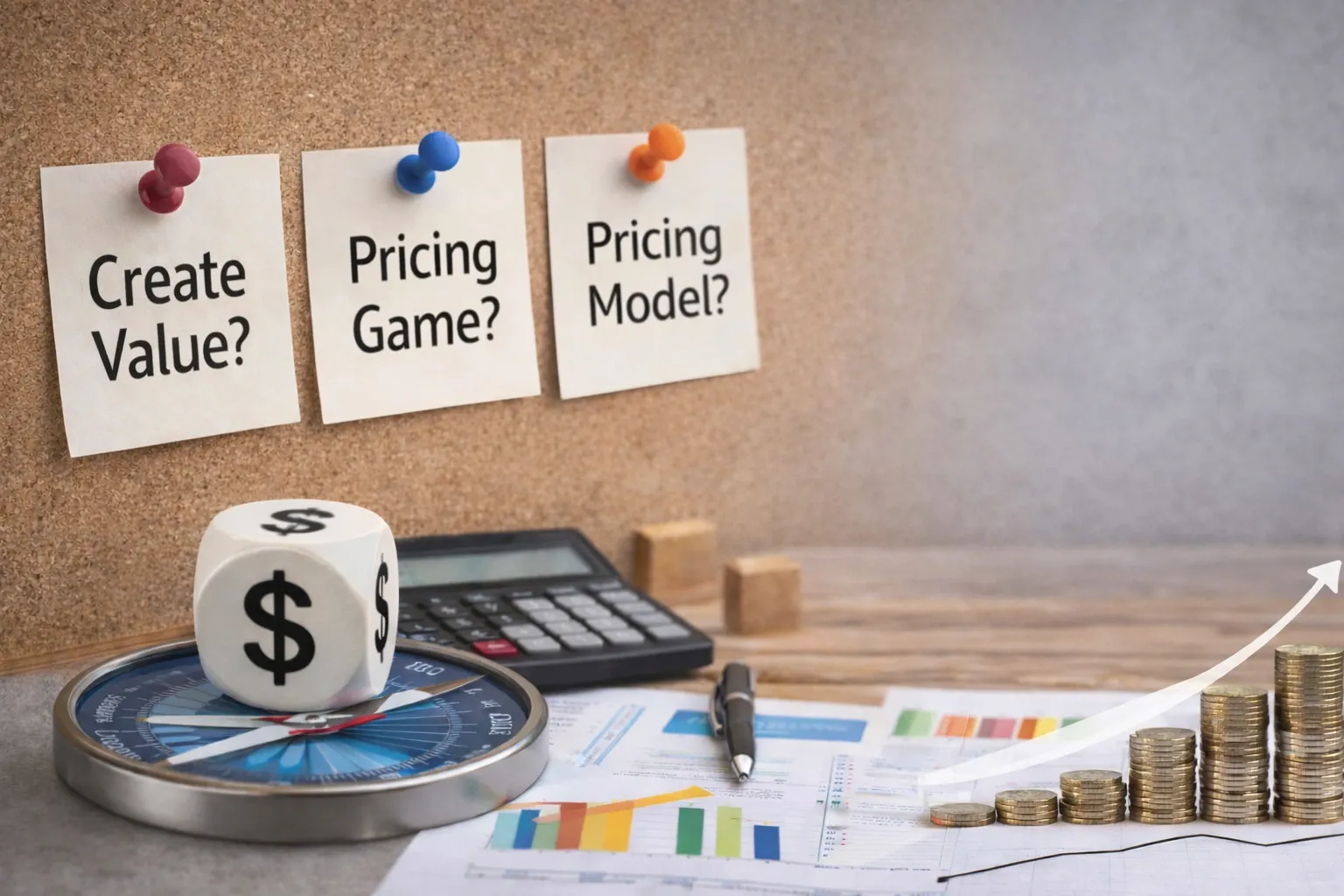
Setting your pricing strategy requires you to answer three questions.
- How do you create and share value? “Value” in this case means the measurable value that your customers perceive. Your answer to this question reflects your value drivers, your limitations, and your objectives for growth and differentiation.
- What pricing game do you want to play? There are seven pricing games, each suited to certain market characteristics and subject to different market forces. You need to decide which game best fits your market and your competitive advantages.
- What pricing model fits your value creation strategy? A pricing model covers how you set and adjust prices, depending on your chosen pricing game. It reflects the choices you make to align incentives across your market and within your organization.
The seven pricing games aren’t gimmicks. They are the logical outcomes of a thought process that integrates familiar pricing inputs, frameworks, and methods in a systematic way. Choosing the right pricing game is vitally important, because it helps business leaders see whether a given pricing method will be effective, ineffective, or an outright strategic mistake.
Pricing Strategy: Different Ways Markets Translate Value Into Price
Business leaders often confuse pricing methods with pricing strategies. When people refer, for example, to a cost-plus pricing strategy, they are describing a method for executing a strategy rather than the strategy itself. That is a nuanced point, but the more important point is that each of these methods or ”strategies” is an excellent fit for one or more pricing games.

Cost Plus Pricing Strategy
Cost Plus Pricing Strategy sets prices by adding a markup to costs. It operates in the Cost Game, where pricing flexibility is limited, competition is intense, and buyers have strong leverage. Successful players of the Cost Game focus on cost control and efficiency, including industrial suppliers, distributors, and government contractors.

Value-Based Pricing Strategy
Value-Based Pricing Strategy applies in the Value Game, where high-quality offerings face less competition, and buyers have limited power. Value-based pricing is most helpful when economic and emotional value exceeds alternatives, and buyers are fragmented. Firms align prices with perceived value and defend them through strong, consistent marketing.

Competition-Based Pricing Strategy
A competition-based pricing strategy sets prices based on competitors. It suits the Custom Game, in which firms negotiate discounted deals with individual customers amid heavy competition. Markets lack standard segments and pricing structures, so companies price based on competition. The Custom Game is most common in B2B industrial goods sectors.

Psychological Pricing Strategy
Psychological Pricing Strategy spans the Power Game, Choice Game, and Dynamic Game. Power Game players rely on game theory in concentrated markets. Choice Game firms use behavioral insights and price differentiation. Dynamic Game players use AI and real-time signals to adjust pricing based on demand, capacity, and inventory conditions.
Pricing Strategy Examples Across Markets
The descriptions of the different pricing strategies or methods referred to several industries and I take a closer look at a handful of them next.
Consumer Products
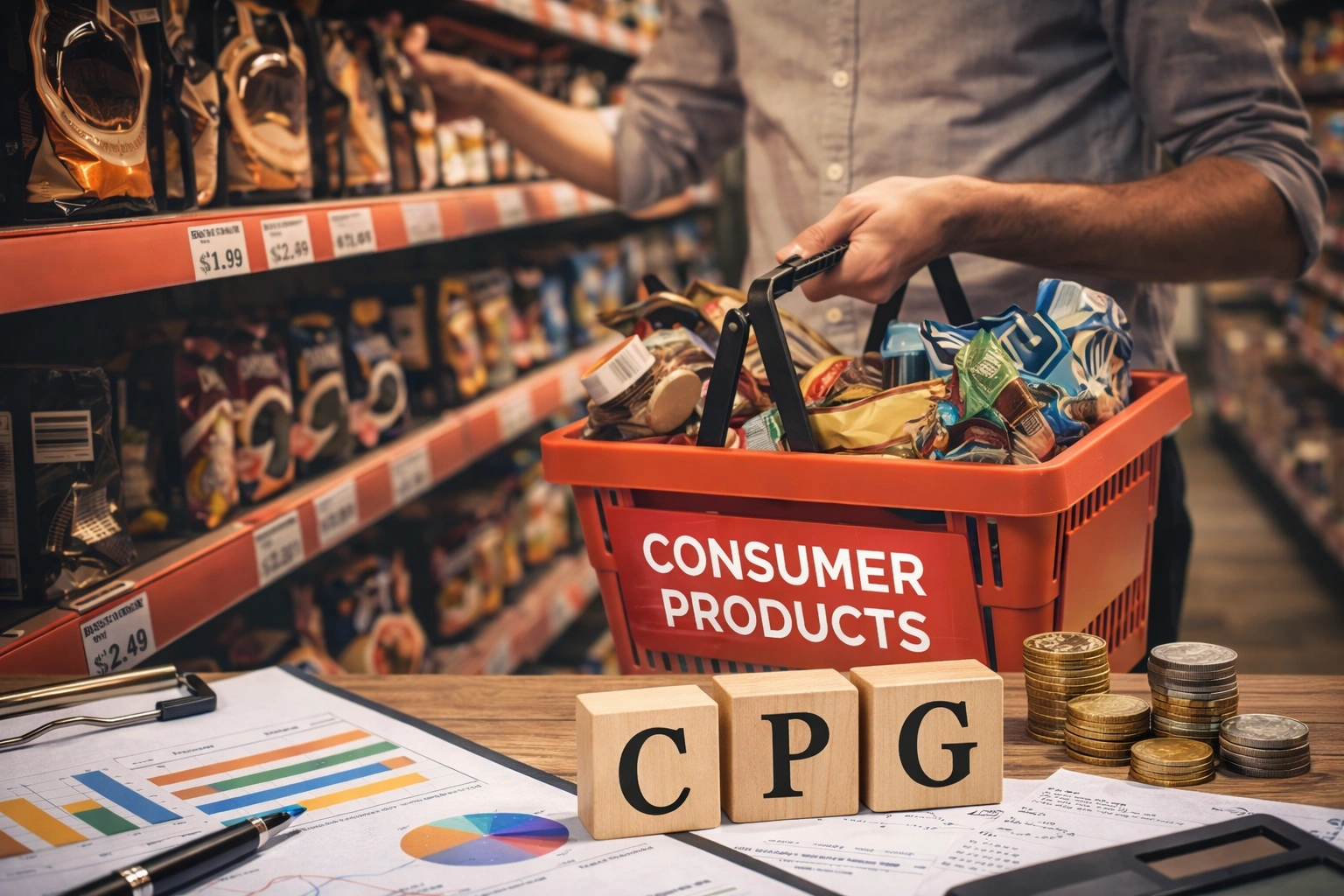
Consumer products companies typically play the Uniform Game, optimizing a single price by balancing volume and margin. Price elasticity guides decisions in markets with many similar buyers and sellers. As capabilities grow, firms also adopt the Choice Game or Dynamic Game, while retailers and CPG players use the Power Game in negotiations.

Technology and Software
The technology and software sectors tend to remain profitable even though prices for software and hardware fall significantly over time, relative to the value they generate. Depending on their market characteristics, they may play the Choice Game, Value Game, or Power Game.

Healthcare and Regulated Industries
The Value Game is common in healthcare, especially when products are under patent protection. What companies in this sector need to focus on is their pricing model. Should they charge per patient, per patient over time, or per population? My TED talk on healthcare pricing looks at these options.

Retail and E-commerce
Most retailers have played the Uniform Game since the invention of the price tag in the 1800’s. But now they have immense opportunities thanks to technological innovations and access to previously untapped data. At the same time, they also face the maturity of e-commerce. That is why many retail and e-commerce companies are exploring whether to switch to the Dynamic Game.

Industrial and B2B Markets
Players in industrial and B2B markets must carefully select their pricing game because it will determine how well they can manage product differentiation, maintain discipline in their negotiations, and use market characteristics to their advantage. Custom Game, Choice Game, or Power Game are the options, depending on market characteristics.
Pricing Strategy vs Pricing Decisions
One of the most important pricing decisions a company makes is its choice of a pricing model, which is the manifestation of its pricing strategy. Before they set a price, business leaders need to determine the basis for their prices and decide how they will adjust prices as market conditions change. The pricing model is therefore a set of choices that aligns incentives across your entire business, both in the market and within your organization.
FAQS
A pricing strategy is a business leader’s conscious decision about how to shape their market, determining how much money flows, where it goes, and to whom. It reflects a company’s philosophy on acquiring, retaining, and satisfying customers by sharing value fairly. A pricing method, such as cost-plus or value-based pricing, is a means for executing that strategy and confusing the two leads companies to focus on finding the right numbers rather than making the right strategic choices.
The seven pricing games are the Cost Game, Value Game, Custom Game, Power Game, Choice Game, Dynamic Game, and Uniform Game. Each reflects a different set of market conditions, including competitive intensity, customer concentration, product differentiation, and the balance of power between buyers and sellers. Choosing the right game requires an honest analysis of your market characteristics and competitive advantages. The wrong choice can make even a technically sound pricing method strategically counterproductive.
When pricing is designed to share value rather than extract it, customers feel they are being treated fairly. This encourages them to try your product, repurchase it, and deepen their relationship with you over time. This mindset also creates incentives that align your business with your customers’ interests. Strategically deciding how much value to share, and when, becomes a tool for growth rather than simply a margin optimization exercise.
The three foundational questions are: (1) How do you create and share value? This covers the measurable value customers perceive, your growth objectives, and your competitive limitations. (2) What pricing game do you want to play? This requires matching your market characteristics and competitive advantages to the right game. (3) What pricing model fits your value creation strategy? The model determines how you set and adjust prices and how you align incentives inside and outside your organization.
Value-based pricing is most effective when a company’s offerings deliver economic and emotional value that significantly exceeds what competitors provide, and when buyers are numerous and fragmented enough that no single customer holds meaningful purchasing power. High-tech, luxury goods, and pharmaceutical companies are the classic practitioners. These companies align their prices with perceived customer value and defend that value aggressively through marketing. They play what is called the Value Game, a market condition in which premium pricing is not only possible but also strategically appropriate.
A pricing model defines the company’s offering, its pricing basis, and how to determine and adjust prices as market conditions change. These choices align incentives across your entire business, both in the market and within your organization. Choosing a pricing model is one of the most important pricing decisions a company makes and is best understood as the visible manifestation of its pricing strategy.