

Sustainability
Sustainability is such a broad term that recommendations on pricing strategy aren’t practical unless we narrow down the definition and focus on specific challenges. In that spirit, we will look at two core areas:
- Pricing for sustainable or “green” products and services: The core challenge arises when the costs for a sustainable solution are high, but the willingness to pay – at least on average – is limited. How can B2C and B2B companies resolve this tension?
- Social pricing: Systems of prices can incentivize socially beneficial behaviors that can reduce waste. They can also reduce social costs that consumers, institutions, and governments have rarely taken into account. Congestion pricing in major cities is only one example of social pricing.
A sustainable pricing strategy defines how an organization translates its environmental and social values and vision – and their associated true costs – into commercial terms that make customers, the company, and society at large better off. It also defines how companies justify price differences in ways that customers perceive as fair and credible. A company may position its sustainable good or service as a premium choice, a bundled benefit, or a mainstream expectation.
RECOMMENDED READING
Pricing Strategy for Sustainable or “Green” Solutions
A fundamental tension defines the challenge of crafting pricing strategies for sustainable or “green” goods and services: balancing revenue and true costs while remaining accessible to the market. Without a clear sustainable pricing strategy, even well-intentioned sustainability efforts struggle to move beyond niche adoption or symbolic impact.
Research by BCG in the early 2020’s showed that between 10% and 20% of consumers are either passionate about the environment or concerned enough that they are willing to pay a premium of 20% or more for the right product. That may help offset the true costs of producing that sustainable solution, but the size of the core segment may make it difficult to scale the solution.
Like all pricing strategies, a sustainable pricing strategy starts with the core definition of pricing strategy: “A pricing strategy is a business leader’s conscious decisions on how to shape their market by determining the amount of money available, how that money flows, and to whom. It reflects the company’s philosophy on how to acquire, retain, and satisfy customers by sharing value with them fairly.”
How Sustainability Changes the Logic of Pricing
How should a company account for sustainability when it determines how customers pay and how much customers pay? How should the company justify its price levels? Answering these questions requires an understanding of sustainability across several dimensions:
Segmentation: There is a wide dispersion of customer perceptions of sustainability. Some customers actively seek out sustainable goods and services and build their lives around them, while other customers either won’t pay more to live a more sustainable lifestyle or couldn’t care less. That makes an average price less meaningful and limits the relevance of the uniform game. Pricing must account for these differences without overly fragmenting the market or undermining credibility.
Full costs: The relevant set of costs extends beyond production and distribution to include environmental impact, supply chain responsibility, and long-term resilience. Pricing becomes the mechanism through which companies and their customers acknowledge, share, and absorb these broader costs. Full-cost pricing assumes that prices reflect not only the direct costs of production, but also the broader environmental and social costs associated with an offering.
Communication: Customers do not experience environmental costs directly in the same way they experience quality or performance. Pricing strategies must therefore connect full-cost logic to outcomes that customers recognize, such as durability, reliability, or long-term savings, if they are to support sustainable adoption. Without a clear pricing narrative, customers may struggle to connect higher prices with meaningful impact. B2C companies that redesign their offerings with the highest standards of sustainability and product functionality might be able to justify a high premium.
Timing: A company may be willing to accept little or no margin in the short run if it has confidence that scale effects – expressed through the experience curve – will reduce costs so significantly over time that the offering becomes profitable. This also matters to customers. Their sustainable investments often deliver value only over extended horizons, while companies feel pressure to cover costs in a shorter timeframe. This can create tension when the sustainable benefits are deferred, but payment is immediate.
Scale: Pricing sustainability at a premium can support early innovation and signal differentiation, yet it risks limiting impact to a narrow segment. Lower prices, in turn, may encourage rapid and broad adoption, but may strain margins, create capacity constraints, or slow investment in sustainable practices. The dynamics of pricing for drugs that can cure Hepatitis C – which can have a massive social benefit – illustrate this tension.
Supply chain: B2C companies can help transform the upstream value chain when they commit to creating predictable demand for sustainable products, and then work with their suppliers – and their suppliers’ suppliers – to mitigate costs across the supply chain.
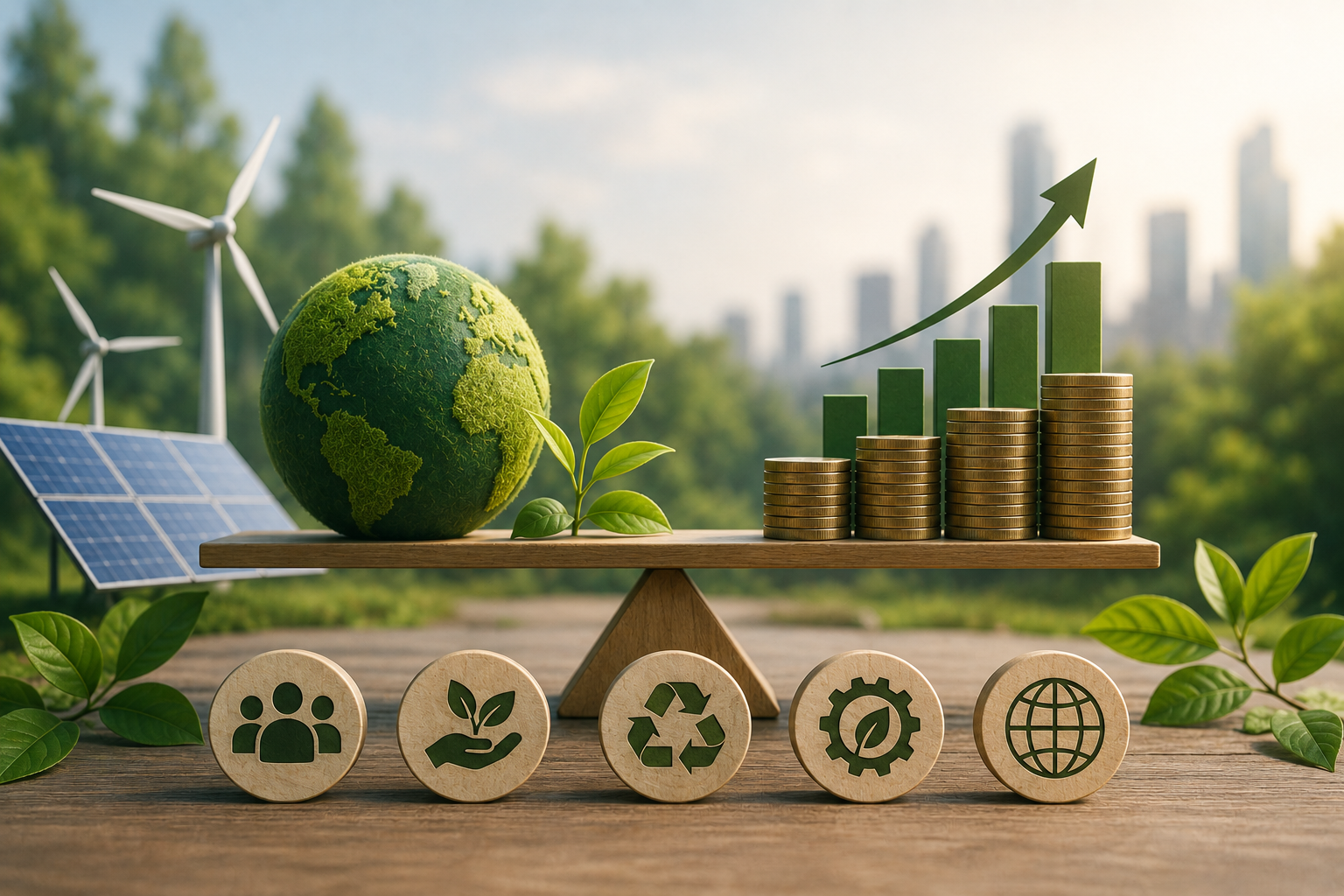
Sustainable Pricing Strategies by Pricing Game
B2B and B2C companies generally have three viable options for a pricing game when they take sustainable goods and services to market.

Choice Game
The choice game is the default option. Firms offer segment-specific sustainable options alongside conventional ones and encourage customers to opt in. They embed sustainable benefits into a choice architecture, perhaps highlighting specific benefits (e.g., safety, durability, health) for certain segments.

Value Game
A company can play the value game when it can own a niche and change the market’s perception. Sustainability becomes a premium signal. Prices reflect higher costs or differentiated impact, appealing to segments willing to pay more for environmental or social outcomes. Long-term viability depends on whether sustainability remains exclusive or transitions toward scale.

Custom Game
The custom game applies more to B2B situations, when a company works with customers to identify the impact of less waste, lower environmental impacts, greater safety, or other sustainable benefits. Benefits may increase, and costs may decrease over time, creating more flexibility for sharing value.
Sustainable Pricing in Practice
Sustainable pricing examples vary widely across markets, reflecting differences in cost structures, customer expectations, and regulatory environments. What unites them is not uniform pricing logic, but a shared effort to align sustainability outcomes with customers’ desire for them and their willingness to pay.
Consumer Products
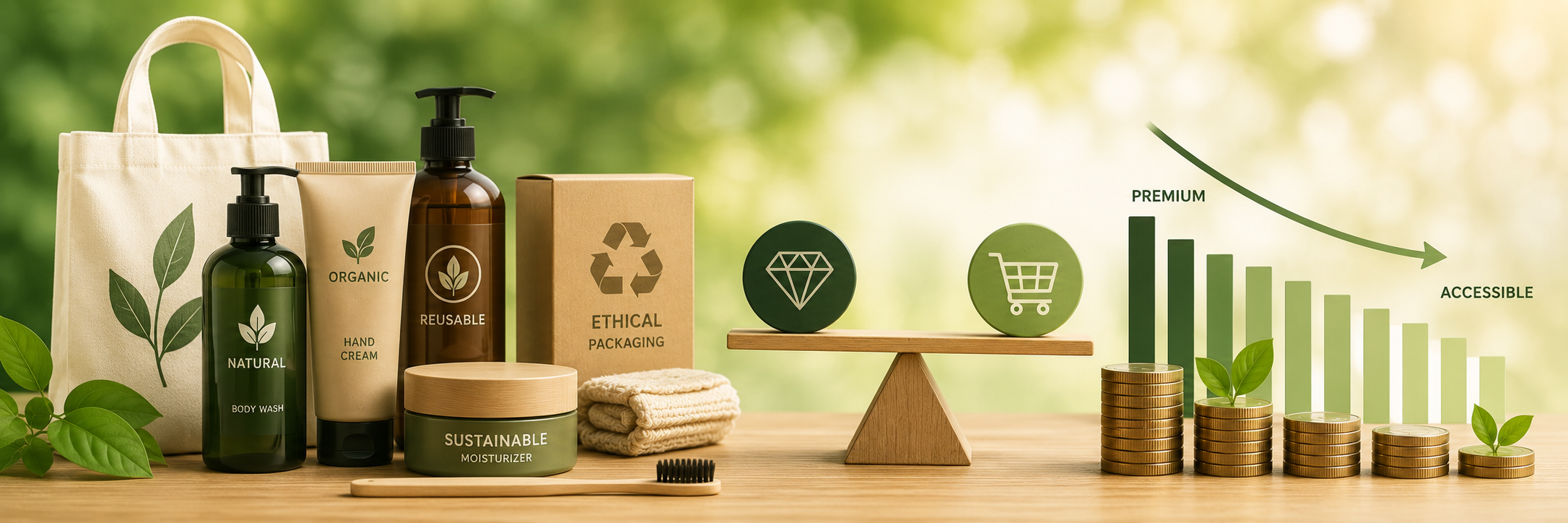
Sustainable pricing often balances premium positioning with accessibility. Products that emphasize ethical sourcing or reduced environmental impact may initially carry higher prices, justified through quality, durability, or brand trust. Over time, pricing strategies often evolve toward broader affordability if scale increases.
Energy and Utilities
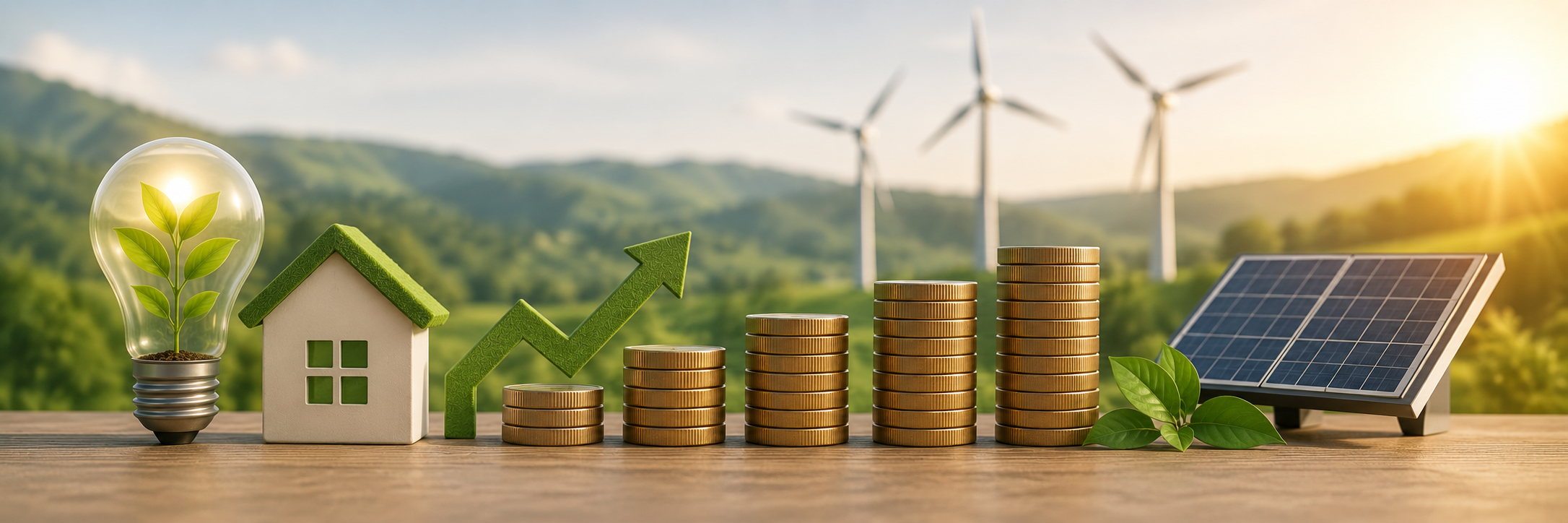
Sustainability is monetized in long-term pricing models rather than upfront premiums. Prices reflect investments in renewable infrastructure, efficiency, and resilience, allowing customers to participate in sustainability through gradual shifts rather than immediate price shocks.

Technology and Services
Pricing can reflect lower resource intensity, optimized consumption, or extended product life cycles. Companies communicate sustainability through outcomes, reduced waste, lower energy use, or longer-term value, rather than symbolic pricing cues.

Industrial Goods
Sustainability is often monetized through contracts, standards, and total cost considerations. Prices incorporate factors such as resource efficiency, compliance, and risk reduction, linking sustainability directly to operational reliability and long-term cost stability.

Pricing Strategies for Social Behaviors
Effective pricing can alter the behavior of a population in ways that achieve a net social benefit, such as less pollution. Instead of banning cars within a metropolis, for example, what would happen if a state or local government charged drivers of motor vehicles a surcharge to enter the city or a part of it?
Singapore, Stockholm, and London have implemented such “congestion pricing” schemes successfully. The city of New York implemented its own effort in January 2025 after a controversial and widely publicized planning phase. Part of the challenge was to understand the true value of driving in the city. Another challenge was to convince skeptics that the plan’s benefits would outweigh any downsides.
In January 2026, a report from the city’s Metropolitan Transit Authority highlighted several important improvements within the Congestion Relief Zone over the program’s first nine months:
- 11% fewer vehicles
- 7.1% less traffic, as measured by vehicle-miles traveled
- 6.1% lower greenhouse gas emissions
The program also generated $468 million in net revenue in its first 10 months, leaving it on track to achieve its first-year target of $500 million.
This is just one example of how pricing can shape behavior in socially beneficial ways. The same can apply to housing, education, health care, and other large sectors of the economy which directly or indirectly affect large populations.
FAQS
A sustainable pricing strategy defines how an organization translates its environmental and social values and vision – and their associated true costs – into commercial terms that make customers, the company, and society at large better off.
Full-cost pricing assumes that prices reflect not only the direct costs of production, but also the broader environmental and social costs associated with an offering. Pricing becomes the mechanism through which companies and their customers acknowledge, share, and absorb these broader costs.
One reason is that pricing determines whether sustainable offerings remain niche or can achieve scale. Without a clear pricing logic, sustainability risks being perceived as either unjustified or inaccessible. Effective pricing translates impact into value that customers recognize and accept and takes segmentation, full costs, communication, timing, scale, and supply chain factors into account.
Common sustainable pricing strategies include premium-based approaches (Value Game), choice-based models that allow customers to opt into sustainability (Choice Game), and scale-driven strategies that reduce price premiums over time as efficiencies improve (Custom Game).
No. While early-stage sustainable products may carry premiums due to higher costs, long-term sustainable pricing strategies often aim to reduce or eliminate premiums through scale, innovation, and supply-chain efficiencies. A choice architecture can also enable effective price differentiation.
Some governments or institutions use pricing to influence the behavior of a population. One prominent example is the social improvements – such as safer streets and less pollution – from the implementation of congestion pricing in large cities.