
Have you noticed that the furor around the prices for World Cup tickets has died down since the tournament started? There are good reasons for that, and they offer some broader insights into price perception and price communication.
The in-real-life experiences of fans at the venues across Canada, the United States, and Mexico have changed the narrative around prices. More specifically, the once-in-a-lifetime fun that many fans are experiencing – and that are hard to quantify in dollars and cents – have now more than offset the high levels of doubt and uncertainty that fans expressed prior to the tournament.
How uncertainty alters price perception
When fans have a hard time envisioning their experience at any event, never mind a monumental undertaking such as the World Cup, they base their judgments on the hard information they have available. That is often a price, such as the price for attending an individual match. Prices, therefore, receive a disproportionately high weighting in customers’ minds.
With a few exceptions, prices for the 2026 World Cup group and knockout matches ranged from a few hundred dollars to several thousand dollars. The underlying pricing strategy made this year’s event the most expensive World Cup in history by a significant margin. For customers, though, it is difficult for customers to assess a price-value relationship when the “value” side of the equation is so uncertain.
- Weak comparison basis: The United States last hosted a World Cup in 1994, when the commercial internet and social media as we know it today didn’t exist. That tournament took place at nine venues across the country, but none of those venues were chosen for 2026 and around half of them have been demolished in the meantime. What would the fan experience be like before, during, and after matches in the United States, Canada, and Mexico?
- Skewed information: I heard sentiments like this one a few times in recent weeks: “If you want to hate the United States, watch the news. But if you want to love the United States, visit there and meet the people.” Ahead of the tournament, many foreign fans worried about visa issues, travel logistics, and other concerns that – in the absence of real-life positive experiences – allow media to create negative talking points. What is true and what will really happen?
- Narrow focus: What happens on the pitch in 90 minutes (plus stoppage time) is obviously an essential part of World Cup experience. It’s why the tournament exists. But focusing on the ticket price can create tunnel vision around what turned out to be a great all-around experience with the individual ticket price only one cost component. This reminded me of how Taylor Swift fans described their idea to travel overseas to see her shows instead of going in North America. It became an event rather than a concert.
When the only available hard information for your decision is a high price point colored by a weak context, skewed information, and a narrow focus, it is no surprise that fans express anger at the high prices. There was no counter-narrative until fans started building their own. This lack of a counter-narrative raised issues of fairness as well. Fans can understand scarcity and may accept that demand is strong, but perceived fairness depends on the justification for any price differences or perceived discrimination.
How the narrative changed after June 11th
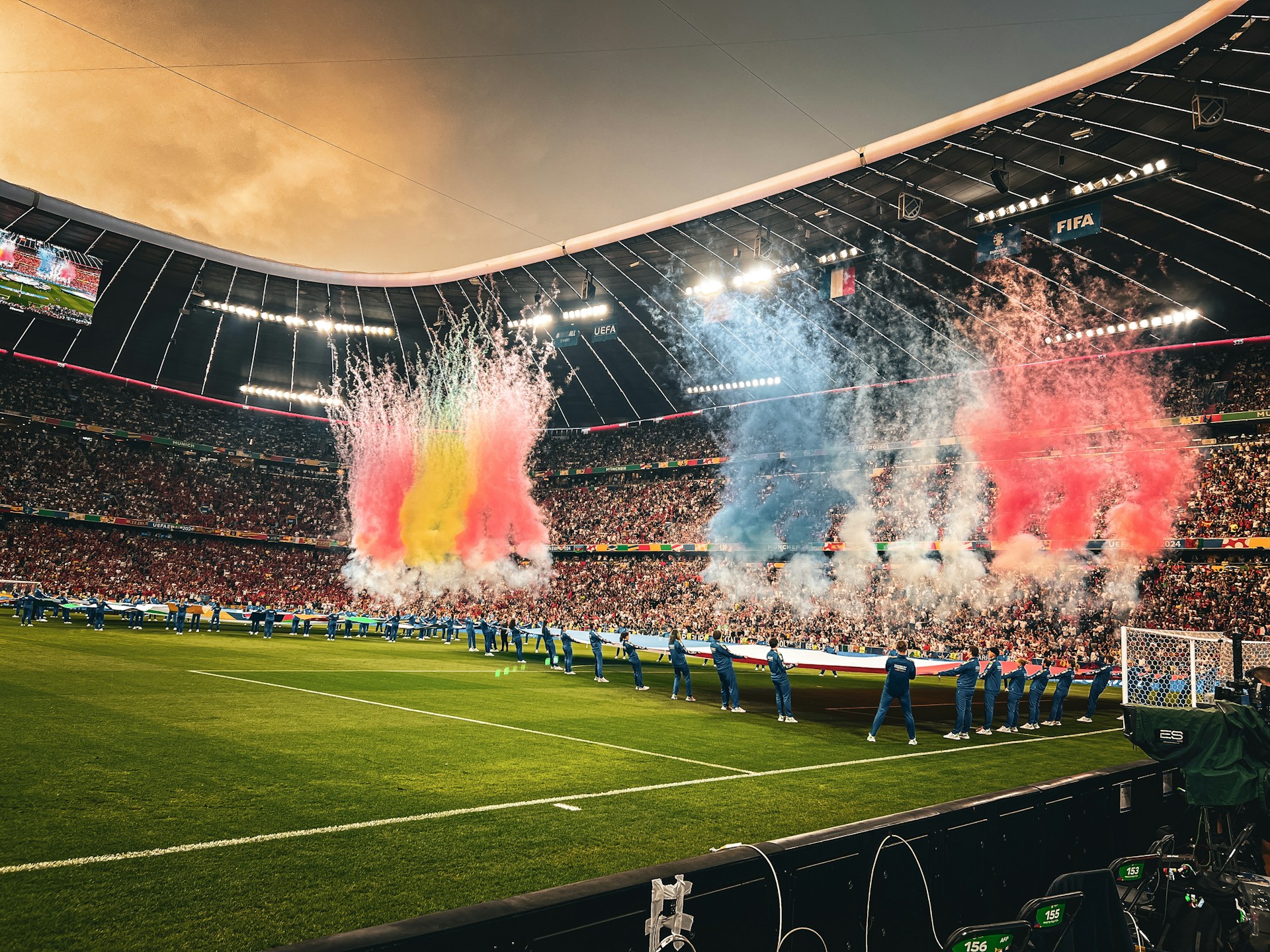
Once the tournament kicked off in Mexico City on June 11th, the new narrative began to take shape. Fans replaced their visceral uncertainty with a visceral real-life good time. Scotland’s Tartan Army “invaded” New England and enjoyed life there far beyond the games at the stadium. The images of Norwegians rowing everywhere up and down the East Coast attracted headlines. The floods of fans to venues occurred almost everywhere. The city of Houston said that it welcomed 500,000 visitors to events there in the first two weeks.
These experiences blended ticket prices into both the overall experience and the game-day experience and gave fans a much different way to put the prices into context. Fans could also better appreciate the price variations which seemed untethered from any clear basis when they were planning their trips.
The lesson: Don’t let pricing control the narrative
Customers of any goods and services will struggle to assess a price-value relationship and unless they can properly assess the value. That’s why a price seen in isolation risks igniting the kind of furor that arose around the ticket prices for the 2026 World Cup. Prices without context and without a well-managed narrative can skew price perception and make customers hesitant to commit. When sellers use dynamic pricing as FIFA did, customers also struggle to evaluate price changes because they don’t see the justification.
Companies shouldn’t hide or disguise their prices. Instead, they should support and define the value story and manage customer expectations. That is a communications challenge for companies, not a mathematical or price optimization one.