
What is the Dynamic Game
In the Dynamic Game, companies decide what price to charge at any particular moment by analyzing current information about a mix of relevant variables. These variables can include demand, available capacity or inventory, competitors’ actions, time, customer behavior, and even external factors such as seasonality or weather. The objective is to keep prices aligned with the value of an offer as that value changes.
Travel and hospitality, sports and live events, e-commerce and retail, and logistics and transportation are common sectors where companies play the Dynamic Game. To maintain a balance between price and value, the strongest players do more than run an algorithm. They build their entire organization around interpreting signals from supply, demand, and competitors’ actions, continually improving their models, intervening when an analytically sound price would feel unfair to customers, and communicating price changes clearly.
Human judgment remains essential. Data can reveal a demand spike without explaining whether customers will view a price increase as reasonable. Managers must recognize unusual events, protect important relationships, review outliers, and decide when fairness or long-term trust should outweigh a short-term revenue opportunity.
RECOMMENDED READING


How the Dynamic Game Works
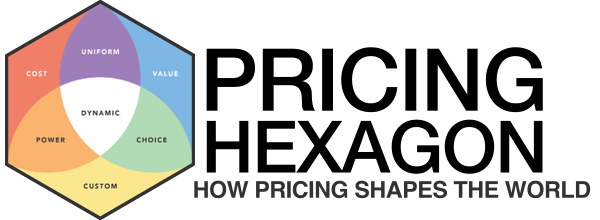
The Dynamic Game – one of the seven pricing games in the Strategic Pricing Hexagon – makes sense when the “right” price depends heavily on current market conditions and the company has the capabilities to change prices frequently and communicate the rationale behind them. Demand may fluctuate by hour, day, season, location, customer context, or available supply, which in turn may be scarce or perishable. A hotel room left empty tonight or an airline seat left vacant when a flight departs, for example, cannot be stored and sold later.
The basic product or service may be identical in an objective sense, but the perceived temporal or contextual value may vary significantly. A vacationer booking a flight months in advance, a traveler seeking the last available seat, and a passenger choosing an unpopular departure time are making different purchases in economic terms, even if they all arrive at the same destination at the same time.
Dynamic pricing can include real-time price changes, but this frequency alone does not define the Dynamic Game. A business can update prices daily or weekly and still price dynamically if those changes systematically reflect market signals. The defining capability is continuous adaptation, not constant movement. Advanced analytics and artificial intelligence can process relevant signals faster and at a scale that manual pricing cannot match. The models predict how customers may respond to a change and estimate the commercial consequences. Teams then test the results, monitor unexpected behavior, and improve the models as new information becomes available.
When Companies Should Play the Choice Game
The Dynamic Game is most relevant when a combination of several market characteristics exists.
- The core offer is relatively standardized, but its value depends on context.
- Demand changes materially over time or across locations.
- Inventory is perishable, time-sensitive, or costly to hold.
- Capacity can be adjusted or allocated among different customers and uses.
- The company serves a broad customer base rather than negotiating every transaction individually.
- Reliable data is available quickly enough to support pricing decisions.
No single characteristic is sufficient. The market structure must support frequent price changes, and the organization must be capable of making them responsibly. A company with fluctuating demand but poor data may not be ready to play. A company with excellent analytics but long-term contracts and highly customized deals may belong in the Custom Game or Power Game instead.

How to Win the Dynamic Game

Capture Reliable Supply and Demand Signals
A dynamic pricing system is only as useful as the information feeding it. Companies need timely, relevant data and clear definitions for demand, capacity, and inventory. They also need to distinguish a lasting market change from temporary noise. Weak signals can cause unnecessary price movements which can lead to missed opportunities or result in price changes that customers cannot understand.

Improve the Models Continuously
Successful players test price responses, compare forecasts with actual results, and update their models as customer behavior, competitive conditions, and technology change. They also measure more than immediate revenue impacts. Conversion, utilization, cancellations, repeat purchases, customer complaints, and channel behavior can reveal insights and opportunities that a narrower optimization model misses.

Keep People in the Decision Process
Algorithms should support decisions rather than operate without accountability. Pricing teams need guidelines for reviewing unusual recommendations, pausing automated changes, and documenting exceptions. They must also know who has authority to intervene and which outcomes require escalation.

Make Fairness Part of the Design
Customers often accept price variation when the reasons are transparent and familiar. They are more likely to object when price changes feel arbitrary, exploit urgency, or discriminate in ways they cannot understand. Companies should decide in advance which inputs are appropriate. They also need to decide how they will explain meaningful differences in price and which customers may need protection, exceptions, or additional support.

Coordinate the Whole Organization
Dynamic pricing affects marketing, sales, operations, finance, technology, and customer service. Strong players align these functions around common objectives and a consistent account of how prices are set. When one function acts independently, it can disrupt the equilibrium and create difficulties for other functions, such as when a service representative needs to explain why two similar customers see very different prices.
Dynamic Pricing Examples

Travel and Hospitality
Airlines and hotels manage fixed, perishable capacity while demand changes by date, booking window, remaining availability, competitors’ actions, and external factors. Their pricing systems use booking patterns and inventory controls to update offers. Some customers may want to lock in lower prices by booking earlier, choosing less popular times, or accepting less flexibility, while others may want to wait and accept the risk that prices might increase.

Sports and Live Events
Teams and event operators face highly variable demand for a limited number of seats. Opponent, timing, weather, team performance, and remaining inventory can all affect value. Dynamic pricing can improve attendance and revenue, but sudden price increases around high-interest events can create fairness concerns if the logic is poorly communicated.

Ecommerce and Retail
Retailers can adjust prices or promotions as inventory, traffic, and demand change and as competitors act. The challenge is to avoid training customers to wait for discounts or creating inconsistent experiences across channels. Dynamic decisions should fit the retailer’s broader positioning and customer promise.

Logistics and Transportation
Logistics providers allocate limited capacity across routes, delivery windows, and service levels. Prices can reflect congestion, urgency, fuel costs, network utilization, and the flexibility a customer is willing to accept. The model works best when incentives help customers choose options that also improve network efficiency.
Benefits and Risks of the Dynamic Game
| Potential benefits | Common risks |
|---|---|
| Better use of limited or perishable capacity | Price changes that customers perceive as arbitrary or exploitative |
| Prices that respond to current levels of demand and customer value | Overreliance on incomplete data and opaque algorithms |
| Incentives that shift demand toward available times or inventory | Competitive reactions that create destructive price cycles |
| Faster response to changing market conditions | Confusion across sales, marketing, operations, and service teams when changes are too frequent or inconsistent |
| More informed decisions about promotions | Emphasis on short-term optimization that weakens trust or reduces repeat demand |
Dynamic Game Compared With Other Pricing Games
The Dynamic Game can resemble other Games, but the differences come from how the organization views their primary logic for balancing price and value.
- Dynamic Game and Uniform Game: Uniform players search for a broadly effective price and change it less frequently. Dynamic players treat ongoing contextual changes as a central input to price decisions.
- Dynamic Game and Choice Game: Choice players guide customers through a structured lineup. Dynamic players change the prices or availability of offers as market conditions move. A company may use both, but one usually provides the dominant logic.
- Dynamic Game and Custom Game: Custom players negotiate individual deals and terms. Dynamic players typically use repeatable rules or models across many transactions.
- Dynamic Game and Value Game: Value players defend the price of a differentiated offer through superior economic or emotional value that tends to remain high and stable. Dynamic players focus more heavily on time-sensitive supply, demand, and context.

FAQS
The Dynamic Game is an appropriate pricing strategy for markets in which demand, capacity, inventory, competition, or customer context changes frequently. Companies use current signals, analytics, and human judgment to adjust prices and keep them fairly aligned with customer value and market conditions.
No. Surge pricing applies specifically when short-term prices rise during periods of unusually high demand or limited supply. Dynamic pricing is a much broader approach that helps a company continuously manage inventory and demand and can also lead to lower prices as conditions change.
Companies are strong candidates when they manage perishable inventory or adjustable capacity, serve many customers, experience meaningful demand fluctuations, and can collect reliable data quickly. Airlines, hotels, sports organizations, e-commerce retailers, and logistics companies are common examples.
Inputs may include demand, inventory, capacity, booking pace, timing, competitor activity, location, seasonality, customer behavior, and external events or conditions. Companies should use only data that is relevant, reliable, lawfully acquired, and consistent with their standards for customer fairness.
A company should use understandable market signals, communicate why prices vary, avoid exploiting vulnerable customers or emergencies, monitor outcomes, and give people within the oragnization the authority to review problematic recommendations. They need to design fairness into the system rather than assess it only after customers have objected.
No. Companies used dynamic pricing long before modern artificial intelligence. AI can improve speed, forecasting, and scale, but it does not replace sound market logic, reliable data, clear governance, or human judgment.